
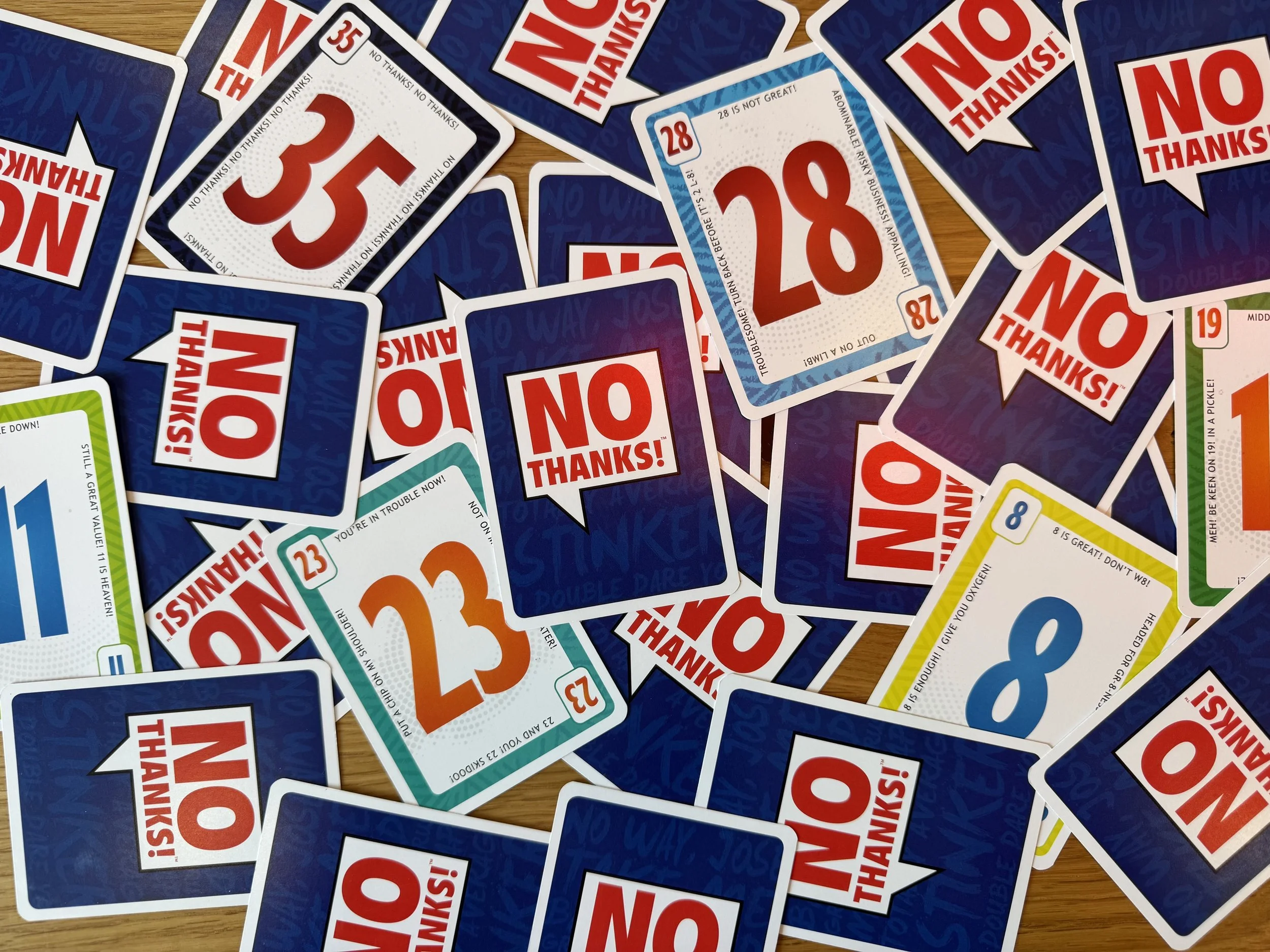
a game of restraint, temptation, and knowing when to walk away
At Ligare, we believe the best connections happen when someone pauses, smiles, and decides not to do the thing everyone else assumes they should. No Thanks! is built entirely around that moment — the quiet power of choosing no.
Whether you’re brand new to No Thanks! or just need a quick refresher, here’s everything you need to know to play with confidence, hold your ground, and discover how surprisingly connective a well-timed refusal can be.
sometimes the play is just:
no thanks!
objective: end the game with the lowest score by refusing as long as you can, spending chips wisely, and eventually taking the card you didn’t want all along.
what the game is:
No Thanks! is a deceptively simple card game about temptation, restraint, and the quiet drama of refusal. Cards are offered one at a time, and your only real choice is whether to take what’s in front of you — or to pay to make it someone else’s problem.
why we chose it for ligare:
No Thanks! turns saying no into a shared experience. It’s easy to learn, fast-moving, and instantly social. Every round creates moments of silent calculation, peer pressure, and small victories of self-control. You’ll hold the line. You’ll cave at the wrong moment. You’ll watch someone else take the fall. And every time someone finally says yes, the table feels it.
how it works: flip a card. say no. spend a chip. say no again, take the card and pretend that was always the plan..
setup:
Shuffle the deck of numbered cards and remove 9 cards at random, face down, without looking at them. Give each player 10 chips. Flip one card face up in the center of the table to begin.
game overview:
The cards are just numbers — and every number is bad in its own way. On your turn, you either take the face-up card (along with any chips on it) or say “no thanks” and place one of your chips on the card instead. Try to end up with lower numbers, or numbers in a row.
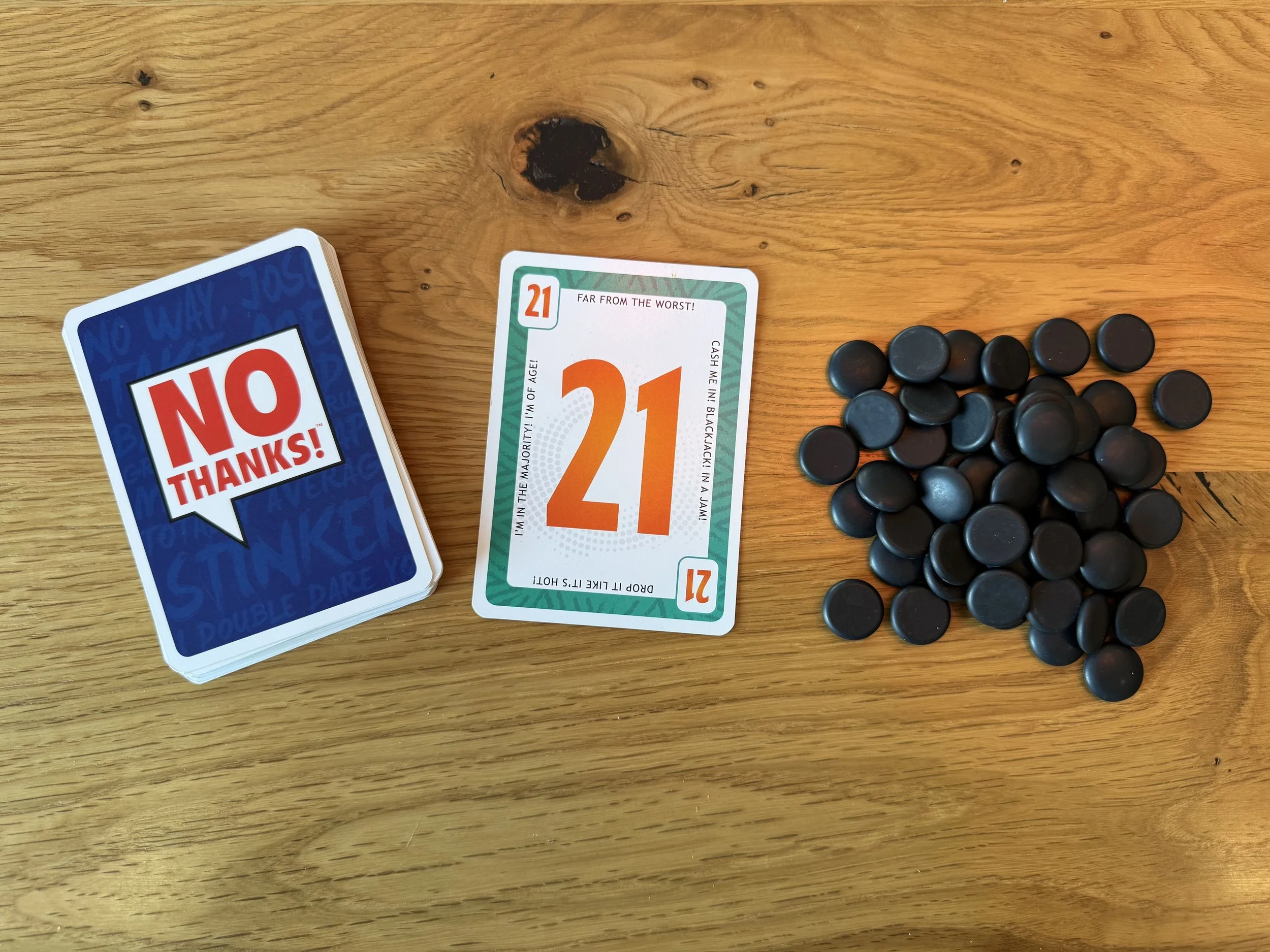
when to say no:
On your turn, you’re always weighing the same question: is this card worse than spending a chip? Saying no costs you now, but chips are worth –1 point each at the end, so holding onto them matters. Taking a card might be the right move if it completes a sequence — because in a run, only the lowest number counts — or if the pile of chips has grown too tempting to pass up. The trick is knowing when refusal is power, and when it’s just denial.
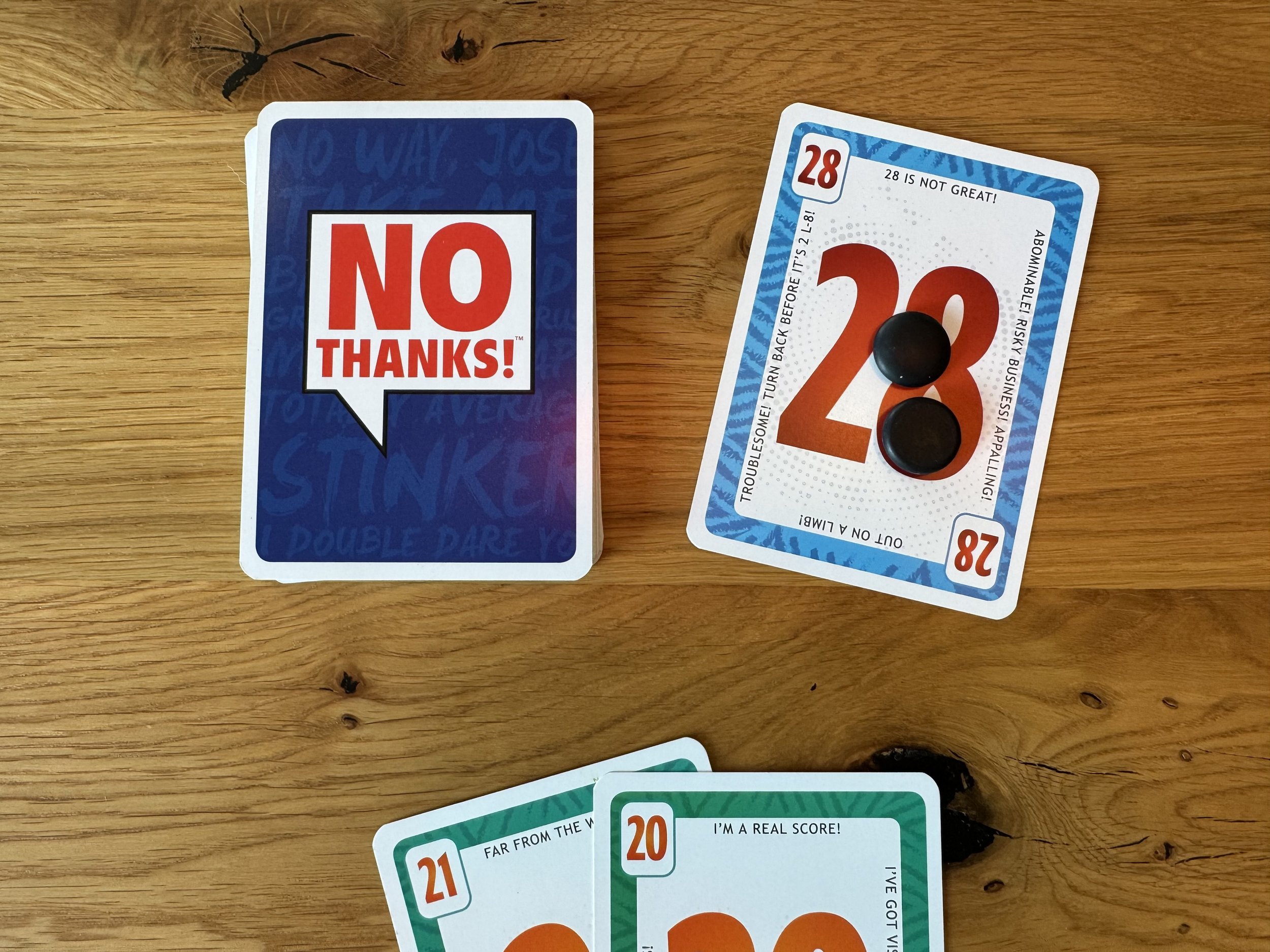
In this example, you could say no and put down a third chip—now it’s your neighbor’s problem. If you take the card, it’s worth 26 points—28, minus the two chips you get to take (and can use to avoid bigger numbers).
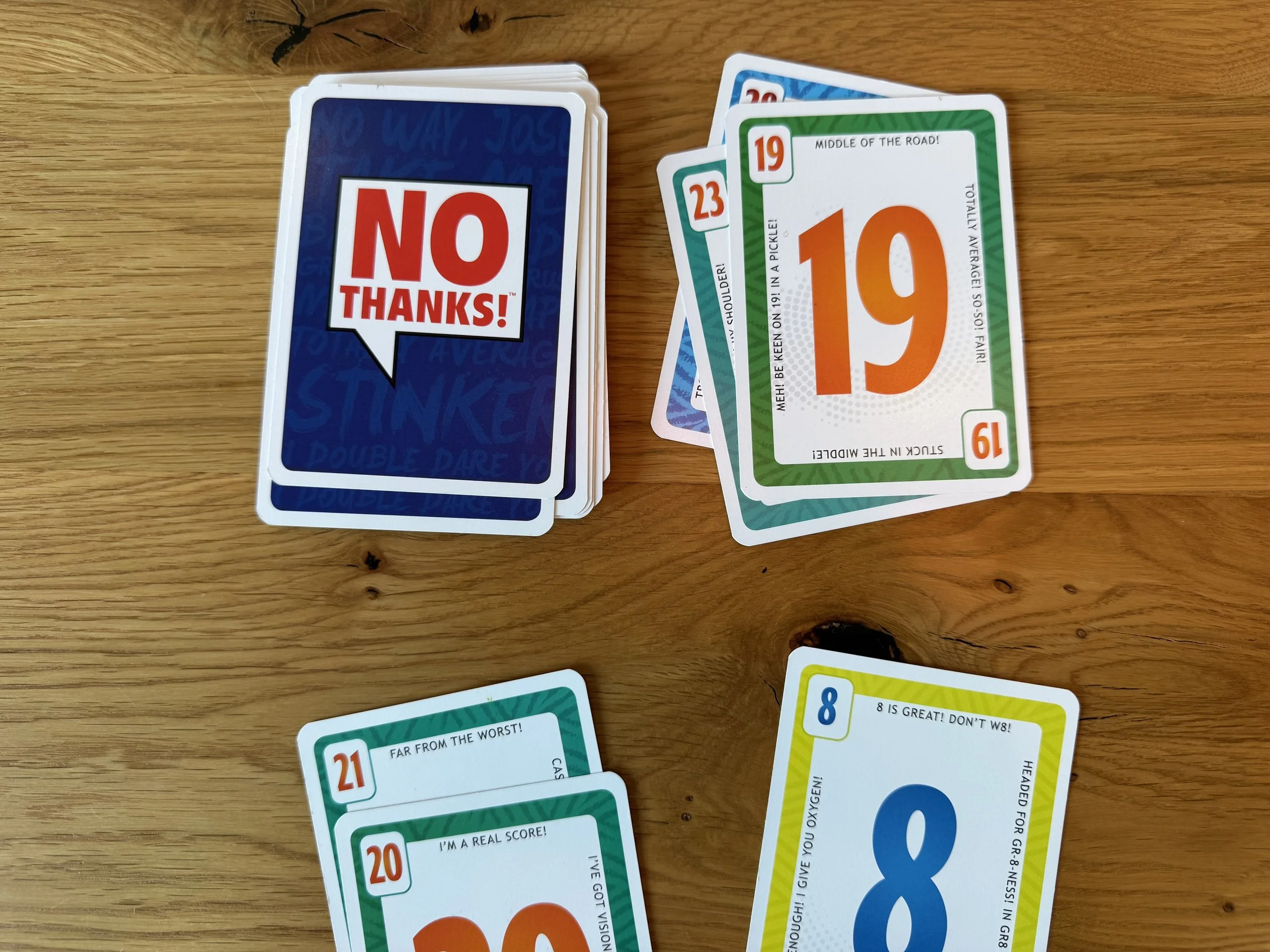
In this example, you already have 21 and 20, and only the 20 counts. If you take the 19, it’s actually -1 points, because it extends your run—so this is a free, easy call.
winning and scoring
When the deck runs out, the game ends and everyone adds up their score. Your total is the value of your cards — remembering that sequences only count as their lowest number — minus one point for each chip you still have. Lowest score wins. Take a breath, reshuffle, and see if saying “no” a little earlier (or a little later) changes how the table feels next time.
at ligare, we play to connect.
Whether you master the art of refusal or cave and take the card everyone’s daring you to accept, we hope you leave the table feeling a little clearer about your boundaries — and a lot more connected than when you sat down.

Sign up with your name and email to get on the list.
We’ll follow up with a short Connection Profile to help us pair you with the right people.
It's fast, fun, and helps us create gatherings that actually feel good.
We’ll only use your info to make better matches—no spam, no weird stuff.